
Hospitality Architect Thailand
Hospitality Architect Thailand Every hospitality project is unique. Rater than applying a signature style, W.O.N. Architect develops practical architectural solutions that respond to each owner’s vision, operation needs, existing building condition and investment goals.
As an Independent architectural practice, we work closely with every client throughout the design process. We continuously study new hospitality trends, renovation strategies and construction methods to deliver practical, buildable solutions with long-term value.
Discuss Your Project with Our Architects (Click)
ปรึกษาโครงการ กับทีมงานสถาปนิก
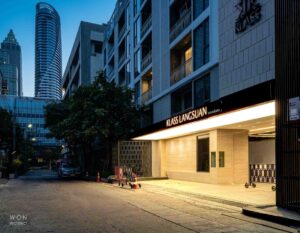
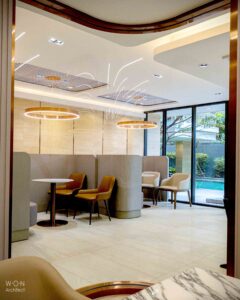
รีโนเวท คอนโด Klass Condominium Renovation: Refreshing Luxury & Functionality
View Project click imageAfter years of successful operation, the Klass Condominium underwent a strategic architectural renovation designed to modernize its key common areas. As specialists in Thailand’s luxury hospitality and residential resort design, our goal was to elevate the resident experience, solve daily operational friction, and enhance aesthetic value—all while maintaining a smart, balanced budget.
– Modernized Drop-off zone & Traffic flow
– Enhanced Pool Deck Privacy
– Reimagined Lobby & Reception Area
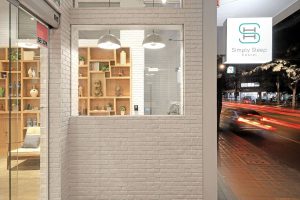

รีโนเวท Renovated Silom Boutique Hotel
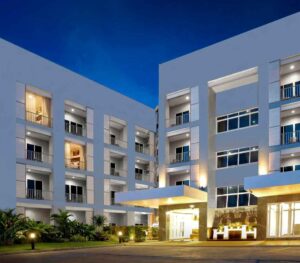
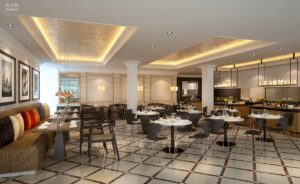
Pattaya Hotel Renovation Building Design (Achada) รีโนเวท:
The Hotel Pattaya’s transformative project converts existing apartment facilities into a modern, upscale hotel. Redesigning and modernizing the common areas, including the welcoming entrance lobby, vibrant all-day dining spaces, and all essential back-of-house operations.. Installing a new, dedicated passenger lift in an isolated structure. Updating and fully refurbishing all typical guest bedrooms, .Overhauling all mechanical, electrical, and plumbing (MEP) systems, Restoring and repainting
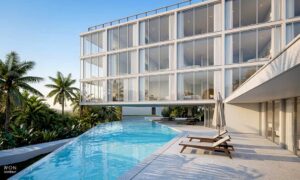
Green Roof Hotel & Residence | Luxury Hospitality Design in Phuket
Situated in a prime coastal location, Green Roof Hotel & Residence showcases innovative hospitality architecture in Phuket. The master plan strategically arranges two hotel buildings and two luxury residential suite towers to maximize sweeping sea and city views across the entire site.
A signature design element is the three-tiered cascading overflow pool, designed as a striking architectural focal point that provides a captivating water view for non-waterfront guest rooms and suites.
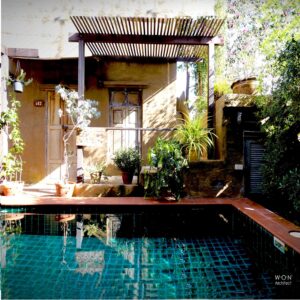
Pranberry Earth Resort:
Eco-Friendly & Sustainable Stay with Rammed Earth Design. it offers a unique sustainable stay experience near Hua Hin, Thailand. As the Phase-II expansion of Pranberry, this eco-friendly resort features a stunning central swimming pool surrounded by private, earth-house guest bungalows. The low V.O.C., natural earth materials emphasize a commitment to bio-climate houses and minimal environmental impact. The resort balances efficiency planning and guest privacy with exquisite local art and craft detailing. Experience an outstanding, earth-themed resort where design meets sustainability.
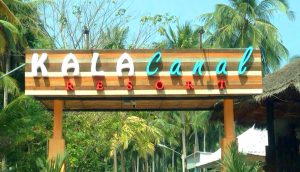
Kala Canal Resort ออกแบบรีสอร์ต
Kala Canal have their own lifestyle. Design approach is to strongly focus on ‘villa Canal Deck’. The guest room facing a small canal customer will enjoy the deck. Redesign Entrance gate with Project Signage and check-in semi-outdoor lobby.
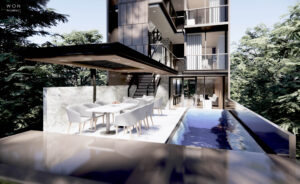
Boutique Hotel Design Udonthani ออกแบบโรงแรม
Boutique Hotel Design Udonthani ออกแบบโรงแรมis situated on a compact site with narrow 6-meter-wide eastern facade and a depth of 24meters. To maximize natural light, ventilation and the visibility of suite guest rooms, an L-shaped pool is strategically positioned in the northeast corner (as focal point). This placement benefits from the building’s afternoon shade, enhancing comfort and sustainability.
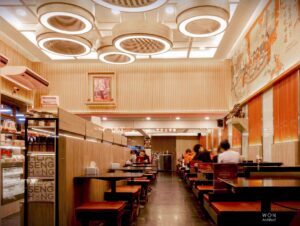
รีโนเวทร้านอาหาร Chinese Restaurant Renovation | Bangkok, Thailand
5 Key Considerations for Hotel & Resort Renovation in Thailand
1. Improve Guest Experience & Operation Efficiency
A successful hotel renovation should enhance both the guest journey and daily operations. Optimize room layouts (Room mix), sea or city views, lobby arrival , reception, all-day dining, back-of house circulation and housekeeping workflow to improve operational efficiency, increase guest satisfaction and support long-term business performance.
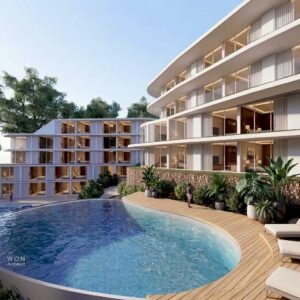
2.Reliable MEP Systems & indoor Air Quality
Well-designed mechanical and electrical systems are essential for guest comfort and long-term maintenance. Select appropriate VRF/VRV or inverter systems, provide adequate fresh air, ventilation, drainage and accessible service routes to minimize humidity, mould, odors and future maintenance costs.
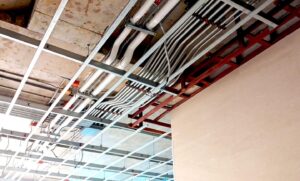
3.Durable Materials & Acoustic Comfort
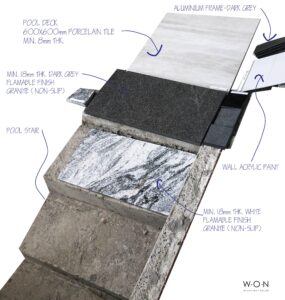
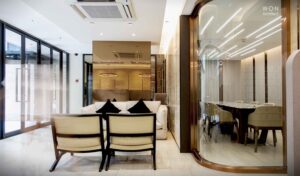
Hotel operate every day. Specify durable commercial-grade materials that are easy to maintain while improving acoustic privacy between guest rooms, corridors and public spaces, Better material selection reduce lifecycle costs and improves the guest experience.
4. Fire Safety, Accessibility & Building Compliance
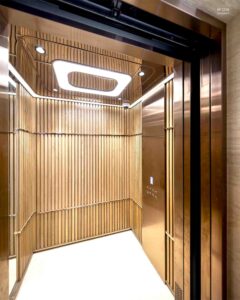
Renovation should meet current Thailand Building regulations while improving safety and accessibility. Careful planning of fire escape routes, fire-rated construction. emergency systems, RFID access CCTV and barrier-free design protections both guest and long-term building value.

5. Waterproofing & Long-term Building Performance (Tropical Hot-humid)
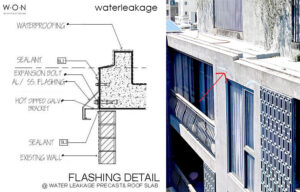
Many renovation problems originate from hidden construction issues rather than interior finishes. Proper waterproofing, facade detailing, roof drainage, movement joint and service access help prevent future failures, reduce maintenance cost and extend building’s service life
Hotel Renovation Thailand: How to Balance CAPEX, Cash Flow and Renovation Priorities
A Practical Guide to Phased Renovation, Asset Management and Long-Term ROI for Hotel Owners.
Successful Hotel Renovation Thailand projects are not simply about creating a beautiful new design. They are strategic investments that protect property value, improve guest satisfaction, and strengthen long-term profitability. The challenge for many hotel owners is deciding when to renovate, what to prioritize and how to fund improvements without disrupting operations or cash flow.
Major Renovation (CAPEX) and Minor Renovation (OPEX/ Maintenance) How to choose the Right Investment
Major renovations, fund through Capital Expenditure (CAPEX), involve long-term investments that extend the building’s service life or significantly improve its performance. (Guest rooms, Facade , Roof, MEP system)
Minor renovation and maintenance, generally classified as Operating Expenditure(OPEX), Focus on preserving day-to-day operations. Typical work includes repainting, replacing carpets, repairing finishes, servicing air conditioning equipment, lighting replacement, and preventive maintenance. Although individually smaller, these activities help delay larger capital investments and maintain guest satisfaction.
Rather than making renovation decisions based solely on age or available budget, experienced owners apply Life Cycle Costing principles. This approach evaluates the total cost of ownership- including construction, maintenance, energy consumption, repairs, replacement cycles, and operating costs-to identify investments that provide the best long-term value.
Renovation Priorities That Deliver the Greatest Return
Not Every component should be renovated at the same time. Prioritization should balance guest experience, operation risk, and financial performance.
1. Guest Room- Highest Revenue Impact
Guestrooms directly influence occupancy, ADR, online reviews, and repeat business. Refreshed finishes, bathrooms, lighting, furniture, and technology often produce the fastest visible return on investment.
2. Public Area (Common Area) -Brand image
Lobbies, restaurants, reception areas, meeting spaces, and arrival experiences shape first impressions. Well-designed public spaces strengthen brand identity and enhance the overall guest experience.
3. Building Envelop- Asset Protection
Roofs, facades, waterproofing, windows, and exterior walls protect the entire asset. Delaying these upgrades can result in water damage, higher maintenance costs, and accelerated deterioration.
4. MEP systems- Operational Efficiency
Mechanical, electrical, plumbing, fire protection and HVAC Systems are critical to hotel operations, Modern energy-efficient systems reduce utility cost, improve reliability, and minimize unexpected downtime.
5. FF&E Replacement- Maintain Quality Standards
Furniture, Fixtures & Equipment (FF&E) naturally wear over time. Planned replacement cycles help maintain brand standards, while avoiding sudden larged expenditures.
Phased Renovation Protects Cashflow
One of the most effective Hotel CAPEX planning strategies is phased renovation. (Basic construction Top-down, back to front contrary -balanced with financial cashflow). Instead of closing an entire property, renovations are divided into manageable stages-such as renovating one guest room block or floor at a time, scheduling work during low occupancy periods, or upgrading public spaces sequentially.
This approach provides several advantages:
• Maintains hotel operations and revenue.
• Reduces pressure on annual capital budgets.
• Minimizes disruption to guests.
• Allow renovation priorities to adapt to market conditions.
• Spreads capital investment over multiple financial years.
For resorts and condominiums in Thailand, phased renovation is often the most practical balance between operation continuity and long-term asset improvement.
Five Practical Recommendations for Hotel Owners
1 Develop a 10-year CAPEX plan based on building condition assessments and expected service life.
2.Prioritize renovations that improve guest satisfaction, operational efficiency, and measurable ROI before cosmetic upgrades.
3. Invest in preventive maintenance to extend the life of major building systems and reduce emergency repair costs.
4. Use Life Cycle Costing to compare long-term ownership costs instead of selecting the lowest initial construction price.
5. Coordinate architects, engineers, operators, and facility managers early to align renovation scope with business goals, cash flow, and operational requirements.
Conclusion
Every Hotel has unique operational challenges, financial objectives, and asset conditions. A successful renovation strategy is not about renovating everything at once- it is about investing at right time, in the right assets, and with right priorities. And experienced architect working alongside hotel operators and engineers can develop a phased renovation master plan that balances guest experience, operational continuity, long-term asset value , and financial performance- helping owners maximize the return on every renovation investment.
เมื่อไรควรวางแผนงบประมาณ CAPEX?
การรีโนเวทโรงแรม คือการลงทุนเพื่อเพิ่มรายได้ ยกระดับปสบการณ์เข้าพัก และรักษามูลค่าทรัพย์สินในระยะยาว
การวางแผนที่ดี ควรแยกงบก่อสร้าง และ งบปรับปรุง (CAPEX) ออกจากงานซ่อมบำรุงอาคาร (Maintenance/ OPEX) และใช้หลักLife Cycle costing เพื่อประเมินต้นทุนตลอดอายุการใช้งานอาคาร
ลำดับความสำคัญในการรีโนเวท 1)ห้องพัก-รายได้ 2)พื้นที่ส่วนกลาง-ประสบการณ์ ความประทับใจ 3)ระบบอาคาร(MEP)-หัวใจของอาคาร 4)เปลือกอาคาร และ 5)ใเฟอร์นิเจอร์ (FF&E) ตามลักษณะอาคาร และ ผลตอบแทนการลงทุน (ROI)
การแบ่งรีโนเวทเป็นหลายระยะ (Phase Renovation) ช่วยให้โรงแรมยังเปิดบริการได้ และ ลดผลกระทบต่อรายได้ และ บริหาร งบ CAPEX ได้อย่างมีประสิทธิภาพ
การบำรุงรักษาอาคาร เชิงป้องกันการชำรุด (Preventive Maintenance) และ แผนลงทุนระยะ 5-10ปี ช่วยลดค่าใช้จ่ายฉุกเฉิน ยึดอายุอาคารและเพิ่มความสามารถในการแข่งขัน
สถาปนิกที่มีประสบการณ์ด้าน รีโนเวท โรงแรม รีสอร์ต และ คอนโดมิเนียม สามารถช่วยวางแผนงบประมาณ ลำดับการลงทุน และ ออกแบบการก่อสร้าง เป็นระยะ เพื่อให้ ธุรกิจ ดำเนินด่อเนื่อง พร้อมสร้างผลตอบแทน และมูลค่าทรัพย์สินในระยะยาว